Exposed Internal Governance Document
via WordPress Media Enumeration
Exposure of classified internal governance intelligence
Risk level: HighA document tagged “C2 Internal” was reachable without authentication — exposing executive identities, org structure, the DLT/blockchain roadmap, voting procedures and the exact location & schedule of internal meetings.
Craft convincing spear-phishing / whaling campaigns against named executives, impersonate leadership across communication channels, physically target executives at known meeting locations, and shortcut competitive & regulatory intelligence at near-zero cost.
During an external attack surface reconnaissance exercise, SentryTrace identified a publicly accessible internal document exposed through a WordPress media API endpoint. The document contained internal governance and operational information that was not intended for public disclosure.
This case highlights how misconfigured public media endpoints can expose sensitive internal assets without authentication.
The exposure was identified during attack surface enumeration targeting publicly accessible assets.
Step 1 — Enumerating WordPress Media API
The WordPress REST API endpoint allowed unauthenticated enumeration of media objects.
GET /wp-json/wp/v2/media?per_page=100&page=1
Host: target-domain.com
User-Agent: Mozilla/5.0
The API response returned a list of media objects including direct file paths.
{
  "id": 1142,
  "date": "2025-04-08T10:22:31",
  "source_url": "/wp-content/uploads/2025/04/internal-meeting-minutes.pdf",
  "mime_type": "application/pdf",
  "media_type": "file"
}
Step 2 — Direct File Access
The file could be accessed directly without authentication. No access controls were enforced.
GET https://target-domain.com/wp-content/uploads/2025/04/internal-meeting-minutes.pdf
→ HTTP 200 OK — file served without authentication
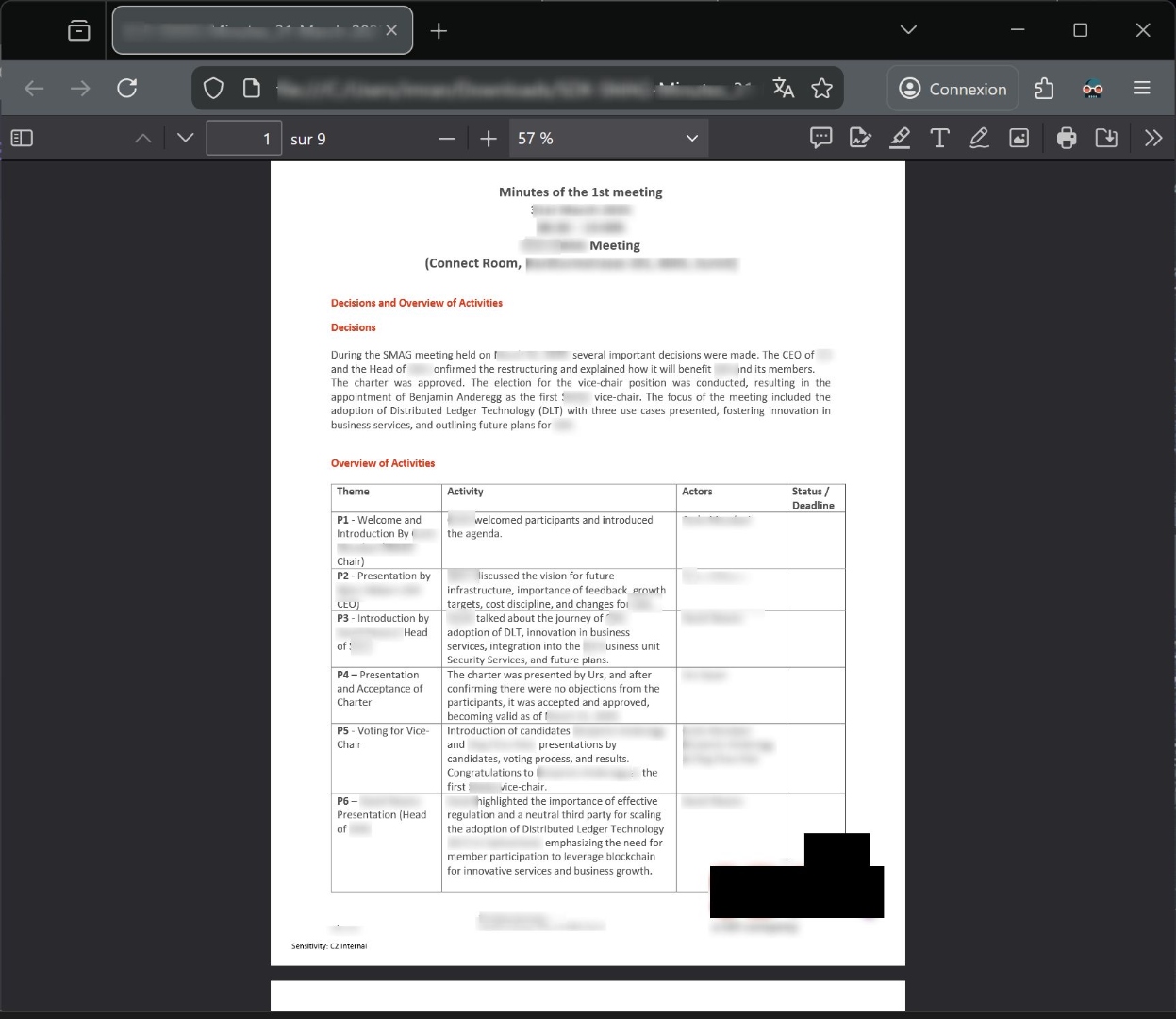
The exposed document contained internal governance information including:
- Executive roles and organizational structure
- Internal meeting schedule and physical meeting location
- Strategic technology initiatives (DLT adoption and blockchain projects)
- Voting procedures and governance decisions
- Internal classification label indicating restricted distribution
The document itself was marked with an internal classification tag, indicating it was not intended for public access.
Although the document did not expose credentials or direct system access, it contained sensitive internal operational information that could be leveraged for targeted attacks.
🎣 Spear-Phishing
Names, roles and org structure could be used to craft convincing phishing emails targeting executives or internal teams.
🎭 Social Engineering
Knowledge of governance structures and meeting formats could enable impersonation attempts across communication platforms.
📍 Physical Security Risk
The document included exact location and schedule of internal meetings, potentially exposing executives to targeted threats.
📊 Competitive Intelligence
Strategic information on technology initiatives and regulatory positioning could provide competitors with valuable insight.
The exposure was caused by a combination of factors:
- Public WordPress media API allowing unauthenticated enumeration
- Internal documents stored in a publicly accessible
/uploads/directory - Lack of access controls on sensitive internal files
This configuration allowed attackers to discover and retrieve internal documents through simple enumeration techniques.
Restrict WordPress Media API
Require authentication or restrict enumeration of media objects for unauthenticated users.
Remove Direct Media URLs from Public Responses
Avoid exposing file paths for sensitive documents through API responses.
Audit Public Upload Directories
Review /uploads/ directories for sensitive internal files and relocate them outside public web directories.
Implement Document Classification Controls
Ensure internal or confidential documents are stored in secure repositories rather than public CMS environments.
Monitor Enumeration Patterns
Detect repeated API enumeration attempts that may indicate reconnaissance activity.
The issue was responsibly disclosed to the affected organization. No attempt was made to modify data, access accounts, or exploit the information beyond confirming the exposure.
This case demonstrates how external attack surface reconnaissance can reveal sensitive internal information through seemingly harmless public assets. Organizations often underestimate how simple enumeration techniques can uncover critical operational intelligence. SentryTrace specializes in mapping and analyzing these external exposures before attackers discover them.